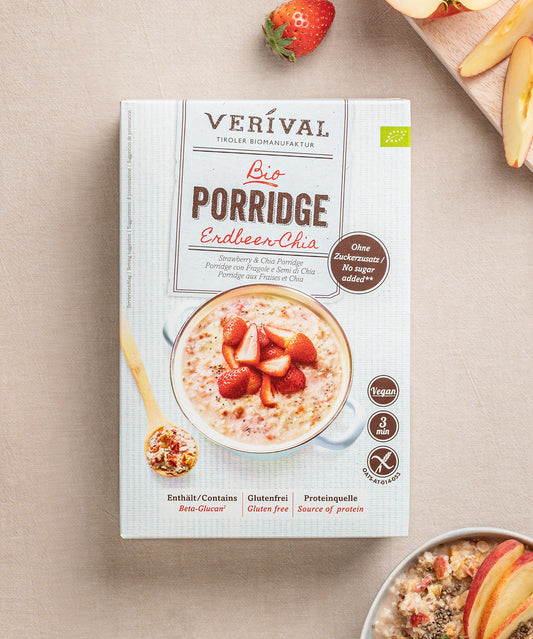
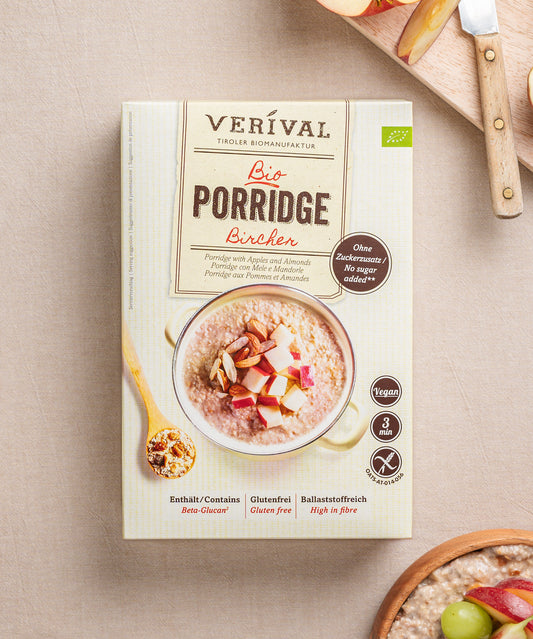
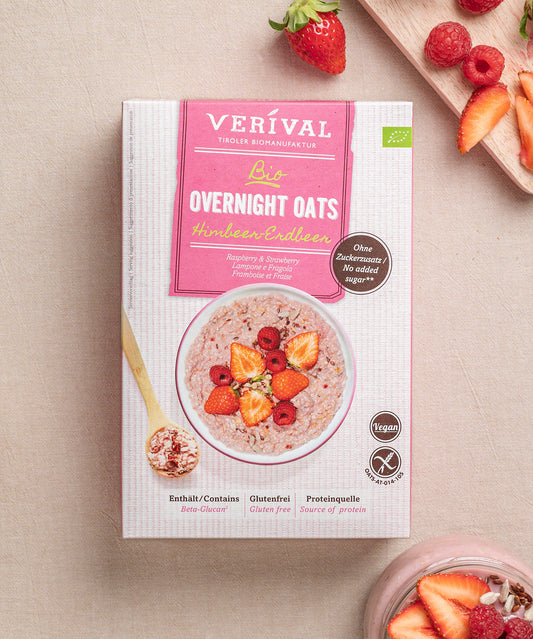
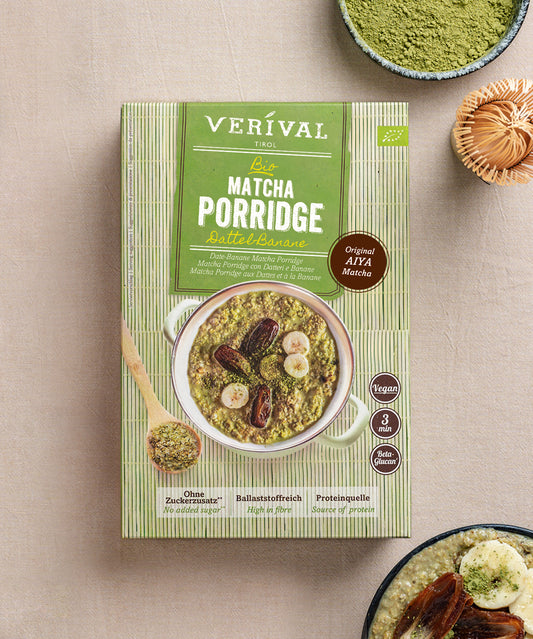
The glycemic index of rolled oats depends heavily on how the oats are processed and prepared. Chunky, coarse rolled oats tend to be digested more slowly than tender or pre-cooked instant rolled oats. Cooking time, portion size, and ingredients such as yogurt, nuts, seeds, or sweet toppings also influence the blood sugar response of the entire meal.
We’ll show you how to put together a balanced oatmeal breakfast.
Verival Oatmeal Breakfast – Discover it now
What is the glycemic index?
The glycemic index, or GI for short, indicates how much a carbohydrate-containing food raises blood sugar levels. Glucose serves as the reference value, with a fixed score of 100.
Foods are typically divided into three groups:
- low glycemic index: up to 55
- medium glycemic index: 56 to 69
- high glycemic index: 70 and above
The lower the GI, the slower the food is digested. As a result, the glucose it contains enters the bloodstream more slowly, and blood sugar levels rise only gradually. With foods that have a high GI, blood sugar levels rise more quickly because glucose is absorbed into the bloodstream faster.
However, the GI is only a guideline. It doesn’t take into account how large your portion is or what other foods you eat with the oatmeal. After all, in everyday life, we rarely eat just a single ingredient.
That’s why the so-called glycemic load is also important. It additionally takes into account the amount of carbohydrates in an actual serving. For your breakfast, therefore, it’s not just the GI of the oatmeal that matters, but the overall composition of your meal.
What is the glycemic index of oatmeal?
Oatmeal does not have a uniform glycemic index. Depending on the flake size, processing, and preparation, it can affect blood sugar levels differently.
Classic, minimally processed oatmeal tends to fall in the low to medium range. In contrast, very finely ground or pre-cooked instant oats are usually digested more quickly and can trigger a stronger blood sugar response.
Statements like “Oatmeal always has a low GI” are therefore too general. To make a meaningful assessment, it’s worth taking a closer look at the different types of oatmeal.
Whole-grain rolled oats
Whole-grain rolled oats, also known as large-flake oats, are made from whole oat kernels. They are larger, firmer, and retain more bite even after cooking.
Due to their coarser texture, the starch they contain tends to be digested more slowly. Whole-grain rolled oats are suitable for porridge, overnight oats, and muesli.

Soft Oat Flakes
Soft oat flakes, also known as small-leaf flakes, are made from crushed oat kernels. They absorb liquid quickly and are particularly well-suited for creamy porridge.
Because of their smaller size and larger surface area, the starch can be digested more quickly than in whole-grain oat flakes.
Instant Oat Flakes
Instant oat flakes are processed particularly finely or are partially pre-cooked. They soften quickly, but their starch is more readily accessible to digestive enzymes. As a result, they tend to have a higher GI.
When buying ready-made instant porridge, it’s worth checking the ingredient list, as it may contain added sugar or other sweet ingredients.
The differences can be summarized as follows:
|
Type of oatmeal |
Processing |
Trends in the GI |
| Whole-grain rolled oats | whole oat kernels, rolled into large flakes | rather low to moderate |
| Soft Oatmeal | crushed oat kernels, rolled into thin flakes | moderate |
| Instant Oatmeal | particularly tender, thin, or partially precooked | trend towards higher |
This classification is provided for reference only. The actual GI always depends on the specific product and how it is prepared.
How Does Processing Affect the GI?
The finer and more pre-cooked the oats are, the faster their starch can be digested. Grinding increases the surface area. When steamed or boiled, the starch swells and becomes more easily accessible.
However, warm porridge does not automatically have a high GI. The type of oats, cooking time, serving size, and other ingredients also play a role.
Why do rolled oats often have a low to moderate GI?
Rolled oats aren’t just made of starch. They also provide plant-based protein, natural fats, and valuable dietary fiber. The soluble dietary fiber in oats—known as beta-glucans—is particularly well-known.
Beta-glucans can bind fluid and form a viscous mass in the digestive tract. This alters the mixing of the chyme, allowing the absorption of glucose derived from carbohydrates to occur more slowly.
A scientific assessment by the European Food Safety Authority from 2026 confirms a cause-and-effect relationship between oat beta-glucans and a reduction in peak blood sugar levels after a meal.
Factors That Influence the GI of Oatmeal
In addition to the type of oats, the preparation method and other ingredients are the main factors that determine how your body reacts to an oatmeal breakfast.
Preparation Method: Porridge, Overnight Oats, or Raw
Cooking makes the starch in oats easier to digest. Very soft, long-cooked porridge can therefore trigger a faster blood sugar response than briefly cooked, chewy flakes.
Overnight oats are simply soaked and not heated. However, this doesn’t automatically mean they have a lower GI. The type of flakes and other ingredients you use also play a decisive role.
Uncooked rolled oats retain more bite and require more thorough chewing. However, commercially available rolled oats are not completely raw, as they are steamed during production.
Combining with Protein and Fats
Protein and fat can slow down the digestion of the entire meal. For example, top your oatmeal with plain yogurt, skyr, nuts, nut butter, or seeds.
These ingredients do not alter the GI of the oatmeal itself, but they can influence the blood sugar response to the finished breakfast. When it comes to plant-based milk alternatives, it’s worth checking the ingredient list, as some products contain added sugar.
Sugar and Sweet Toppings
Sugar, honey, and syrup increase the amount of readily available carbohydrates. Dried fruit also provides concentrated sugar due to the removal of water and should be portioned carefully.
For natural sweetness, try fresh berries, grated apple, a bit of banana, cinnamon, or vanilla. Your breakfast doesn’t have to be completely sugar-free—what matters is the amount and composition of the entire meal.
What are the benefits of low-GI oatmeal?
A breakfast with a lower glycemic index tends to cause blood sugar levels to rise and fall more slowly. This can have a positive effect on energy levels and satiety.
More Stable Energy Throughout the Morning
Coarser oats combined with protein, healthy fats, and fiber can support a more consistent energy supply. How much you notice this effect also depends on sleep, exercise, stress, and your metabolism.
Longer-lasting fullness
Oatmeal contains fiber and swells when mixed with liquid, creating a voluminous meal. For longer-lasting fullness, you can combine it with yogurt, nuts, or seeds.
Support for Weight Loss
A filling oatmeal breakfast can make weight management easier. However, a low GI does not automatically lead to weight loss. Therefore, be mindful of portion sizes and use nut butters, dried fruit, chocolate, or syrup in moderation. Your overall diet and long-term energy balance remain the key factors.
Conclusion: The Type of Oats Makes a Difference
The glycemic index of oatmeal depends on how heavily it has been processed and how you prepare it. Chunky oats retain more of their original structure and tend to be digested more slowly. Soft-textured oats soften more quickly, while finely processed instant oats are usually digested the fastest.
But for a balanced breakfast, it’s not just the type of oatmeal that matters. It’s best to combine your oatmeal with a source of protein, nuts or seeds, and fresh fruit. This way, you’ll have a breakfast that provides you with valuable nutrients and keeps you full for a long time.
Verival Organic Porridge – Try it now
Frequently Asked Questions
Can people with diabetes eat oatmeal?
In general, rolled oats can be part of a balanced diet for people with diabetes. It’s best to choose coarser-textured oats, eat a moderate portion, and pair them with protein, nuts, or seeds. Since the blood sugar response varies from person to person, it should be monitored closely, especially when taking medication.
Which grains have a low glycemic index?
Minimally processed whole-grain products made from oats or barley often have a low to moderate GI. However, it’s not just the type of grain that matters: the way it’s ground, processed, and prepared also influences the blood sugar response.
Are rolled oats good for people with heart disease?
As a high-fiber whole-grain product, rolled oats can be part of a heart-healthy diet. Unsweetened rolled oats, combined with nuts, seeds, and fresh fruit, are the best choice. If you have an existing heart condition, individual dietary recommendations should be discussed with a healthcare professional.